
by Carol Gartland | Dec 10, 2024 | Affordability, Home Prices, Inventory
As inflation continues to strain household budgets and business costs, many are asking: what will it take to bring prices down? While rising costs are influenced by a variety of factors, several key areas could help ease inflation in the near future.
1. Supply Chain Improvements
Global supply chain disruptions, worsened by the pandemic and geopolitical tensions, have caused shortages and increased costs. Streamlining production, improving logistics, and diversifying suppliers could reduce these costs and ultimately bring prices down.
2. Government Policy Interventions
Governments can use fiscal and monetary policies to combat inflation. Central banks may raise interest rates to reduce demand, while fiscal policies like tax cuts or subsidies could lower costs for businesses and consumers. The right balance of these policies can help stabilize prices.
3. Labor Market Adjustments
If wages increase too quickly without productivity gains, businesses raise prices to compensate. A slowdown in wage growth or a cooling labor market could help reduce inflation. Additionally, increasing workforce participation could boost production capacity, helping lower costs.
4. Global Factors
Global commodity prices, such as oil and agricultural goods, greatly impact the cost of goods. If supply improves or demand drops for these commodities, prices could fall. Geopolitical stability, like the resolution of trade conflicts, would also help stabilize prices.
5. Technological Innovations
Advancements in technology, including automation and improved energy production, can reduce production costs across industries. As companies adopt these innovations, they may pass on savings to consumers through lower prices.
6. Reduced Demand
When consumer demand decreases—due to economic uncertainty or changing preferences—businesses may lower prices to attract customers. A shift in consumer spending patterns could help drive prices down.
7. Decreased Inflation Expectations
Managing inflation expectations is key. If businesses and consumers expect prices to stabilize, they may hold off on raising prices or wages, helping to slow down inflation.
8. Currency Stabilization
A stronger currency reduces the cost of imports, which can lower prices for consumers. If a country’s currency appreciates, it may help ease inflationary pressures.
Conclusion
Bringing prices down is complex and requires action across multiple areas, including supply chain improvements, policy changes, and technological advancements. While the timing and success of these efforts are uncertain, a combination of these factors can help ease inflation and provide relief to consumers and businesses alike.

by Carol Gartland | Nov 4, 2024 | Affordability, Buying Tips, For Buyers
Looking to buy a home but feeling like almost everything is out of reach? Here’s the thing. There’s still a way to become a homeowner, even when affordability seems like a huge roadblock – and it might be with a fixer upper. Let’s dive into why buying a fixer upper could be your ticket to homeownership and how you can make it work.
What Is a Fixer Upper?
A fixer upper is a home that’s in livable condition but needs some work. The amount of work varies by home – some may need cosmetic updates like wallpaper removal and new flooring, while others might require more extensive repairs like replacing a roof or updating plumbing.
Because they need some elbow grease, these homes typically have a lower price point, based on local market value. In fact, a survey from StorageCafe explains that fixer uppers generally cost about 29% less than move-in-ready homes.
And that’s why, according to a recent survey, more buyers are considering homes that need a little extra work right now (see below):
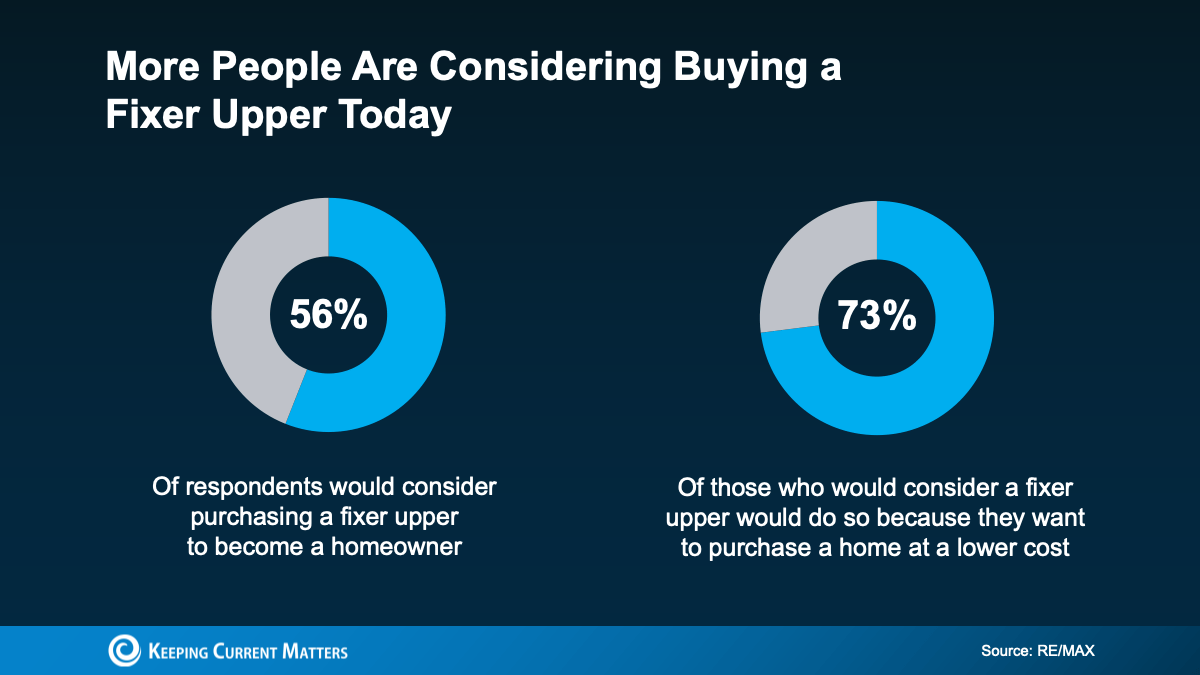 If you’re looking for an option to get your foot in the door, and you’re willing to roll up your sleeves and do a bit of work, a house with untapped potential may be a good option.
Tips for Buying a Home That Needs Some Work
Before you buy a home that may need a makeover, here are a few things to keep in mind:
- Choose a Good Location: You can repair a house, but you can’t change where it is. Make sure the home is in a neighborhood you like or one with increasing property values and a growing number of local amenities. This way, even after you spend money fixing it up, the house will be worth more later.
- Budget for Surprises: Fixing up a house can take more time and money than you might think. Make sure you save room in your budget for unexpected repairs or other unknowns that might come up while you’re working on the house.
- Get a Home Inspection: Before you buy, hire an inspector to check out the house. They’ll help you determine the necessary repairs, so you don’t end up with expensive surprises later.
- Plan Your Priorities: When deciding what to tackle first, it helps to categorize your goals. Think of your home in three ways: the must-haves (essential repairs), the nice-to-haves (upgrades that would make life easier), and the dream-state features (luxuries you can add later). This will help you prioritize and stick to your budget.
Remember, the perfect home is the one you perfect after buying it. By starting with a fixer upper, you have the opportunity to customize a home to your liking while saving money on the initial purchase price. With careful planning, budgeting, and a little bit of vision, you can turn a house that needs some love into your perfect home.
Real estate agents are great at finding homes with potential. They know the local market and can guide you to homes where smart upgrades can add value. With their help, you’re more likely to find a house that fits your total budget and has room for worthwhile improvements.
Bottom Line
In today’s market, where the cost of homeownership can be intimidating, finding a move-in-ready home that fits your budget can feel like a real challenge. But if you’re open to putting in a little work, you can transform a fixer upper into your ideal home over time. A local real estate agent can help you explore what’s possible and find a place that’ll work for you.

by Carol Gartland | Oct 28, 2024 | Affordability, For Buyers, Inventory
Even though there are more homes available for sale than there were at this time last year, there are still more buyers than there are houses to choose from. So, know that if you’ve got moving on your mind, your house can really stand out.
There are several key reasons why there aren’t enough homes to go around and understanding them will help you see why the market is working in your favor if you’re ready to make a move.
What’s Causing the Shortage?
1. Underproduction of Homes: For years, the industry hasn’t built enough homes to keep up with demand. As Zillow explains:
“In 2022, 1.4 million homes were built — at the time, the best year for home construction since the early stages of the Great Recession. However, the number of U.S. families increased by 1.8 million that year, meaning the country did not even build enough to make a place for the new families, let alone begin chipping away at the deficit that has hampered housing affordability for more than a decade.”
2. Rising Costs: Building materials, labor shortages, and supply chain disruptions caused by the pandemic have all made it harder and more expensive to build homes. This can either limit or stop new home construction in some areas.
3. Regional Imbalances: Some markets are more affected by the shortage of homes than others. Popular and more desirable areas have more people moving in faster than new homes can be built. The number of new building permits issued doesn’t always keep pace with job growth in these regions, and that leads to even tighter markets and higher prices.
How Big Is the Problem?
According to estimates from Real Estate News, the U.S. is facing a housing shortfall of roughly 3.3 million homes, based on an average of several expert insights (see graph below):
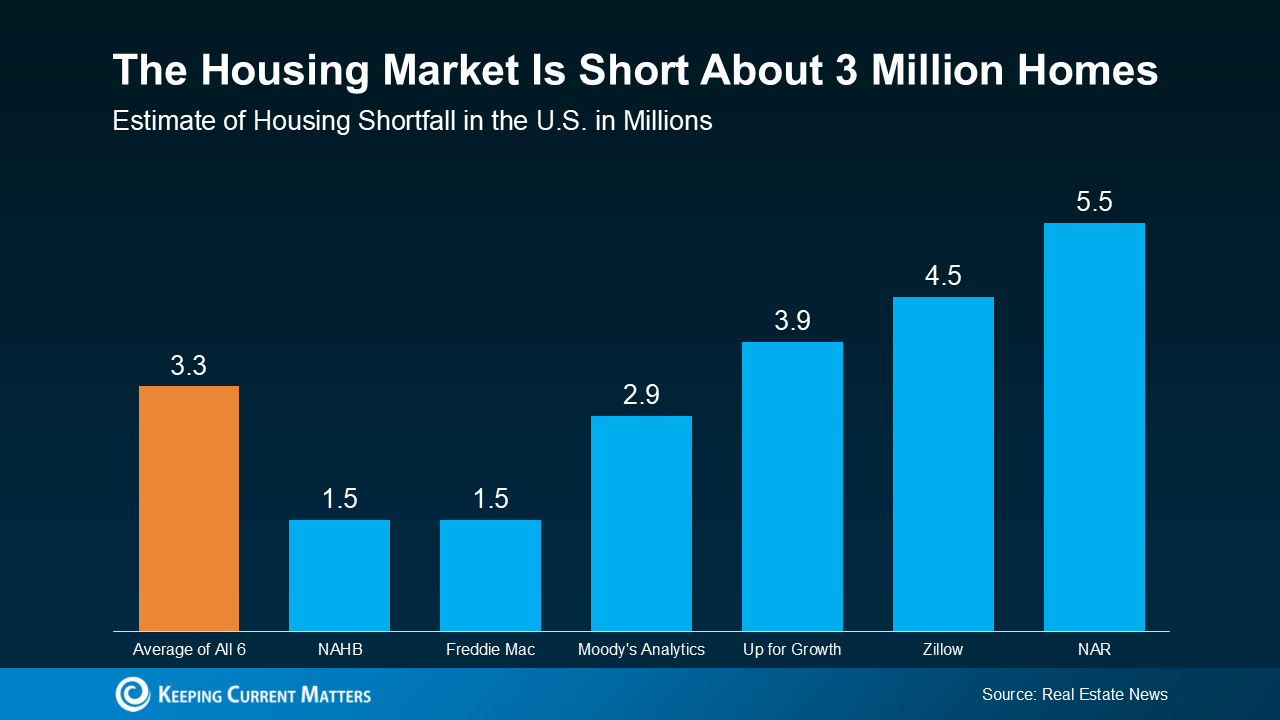 This shows there’s a significant number of homes that need to be built just to meet current demand from buyers. But what about future demand?
According to John Burns Research and Consulting (JBREC), over the next 10 years, the U.S. will need about 18 million new homes to meet projected demand, including homes for new households, second homes, and replacements for aging or unusable homes.
So, even though more homes are on the market compared to last year, there still aren’t enough of them to go around. This is where you can really win if you’re ready to sell your house.
What You Need To Remember
If you’re thinking about selling, the shortage of homes for sale means your house is likely to get some serious attention from buyers. It’ll take years to climb out of this inventory deficit, and the market is still very tight. So, when buyers are competing for relatively few homes like they are right now, that creates more interest in the houses that are on the market, putting upward pressure on prices and ultimately working in your favor.
And since every market is different, it’s important to work with a real estate agent who understands local trends. They can help you price your house right and create a strategy to attract the right buyers.
Bottom Line
While there are more homes for sale than there were at this time last year, there’s still a shortage overall. And this puts you in the driver’s seat as a seller. Reach out to a trusted real estate agent who can help you take advantage of today’s market.
