
by Carol Gartland | Dec 17, 2024 | Inventory, Mortgage Rates
Image by Izhar Ahamed from Pixabay
Hey there! If you’ve been watching the housing market, you might have noticed some exciting changes as we move through November 2024. After a few years of a super hot seller’s market, things are starting to cool down, bringing a more balanced vibe for buyers and sellers. Let’s chat about what’s going on.
Mortgage Rates Are Dropping
One of the most significant changes this month is the drop in mortgage rates. Earlier this year, rates were pretty high, but now they’re coming down, which is excellent news for anyone looking to buy a home. The average 30-year fixed mortgage rate is around 6.5%, down from over 7% in the summer. Lower mortgage rates makes home loans more affordable and is likely to bring more buyers into the market.
Home Prices Are Stabilizing
Home prices have skyrocketed for a while, but now they’re starting to level off. Prices are still higher than before the pandemic, but the crazy double-digit increases are slowing down. In many markets, we’re seeing price growth of about 4-5% year-over-year. The reduction in price growth is a relief for buyers struggling with high prices.
Inventory Is Still Tight
Even though the market is cooling, there’s still a shortage of homes. The national housing shortage is a big issue, with a deficit of about 3.7 million units. Low inventory is especially tough in the rental market, where demand is high. Builders are trying to catch up, but they’re facing higher costs and labor shortages, so inventory is expected to stay tight for a while.
Regional Differences
The housing market isn’t the same everywhere. Some areas are doing better than others. For example, places like Phoenix and Tampa still see strong demand and price growth because of their great weather and growing economies. On the other hand, some coastal markets that boomed during the pandemic are slowing down as people head back to cities.
First-Time Homebuyers Are Stepping Up
First-time homebuyers are becoming more significant in the market. With mortgage rates dropping and prices stabilizing, more first-timers are finding it possible to buy a home. They still face challenges like high prices and limited inventory, but programs that offer down payment assistance and favorable loan terms are helping.
Economic Factors at Play
The overall economy is also affecting the housing market. The U.S. economy is doing well, with solid growth in the third quarter of 2024. However, the job market is cooling, and inflation is still higher than the Federal Reserve’s target. These factors are making buyers and sellers a bit cautious.
Looking Ahead
The housing market is expected to remain balanced as we look forward to the rest of 2024 and into 2025. Mortgage rates might stay volatile but should gradually decrease, making it easier for buyers. Home prices are likely to stabilize more, and hopefully, we’ll see some improvement in inventory levels as builders ramp up production. Whether buying or selling, staying informed about these trends can help you make the best decisions.
—
So, that’s the scoop on the housing market in November 2024! It’s a time of change, with some good news for buyers and a bit of a hiatus for sellers. If you have any questions or need more details, feel free to ask. Happy house hunting!
Sources
: Freddie Mac
: U.S. News
: Norada Real Estate
I hope this version feels more engaging! Let me know if there’s anything else you need.

by Carol Gartland | Dec 10, 2024 | Affordability, Home Prices, Inventory
As inflation continues to strain household budgets and business costs, many are asking: what will it take to bring prices down? While rising costs are influenced by a variety of factors, several key areas could help ease inflation in the near future.
1. Supply Chain Improvements
Global supply chain disruptions, worsened by the pandemic and geopolitical tensions, have caused shortages and increased costs. Streamlining production, improving logistics, and diversifying suppliers could reduce these costs and ultimately bring prices down.
2. Government Policy Interventions
Governments can use fiscal and monetary policies to combat inflation. Central banks may raise interest rates to reduce demand, while fiscal policies like tax cuts or subsidies could lower costs for businesses and consumers. The right balance of these policies can help stabilize prices.
3. Labor Market Adjustments
If wages increase too quickly without productivity gains, businesses raise prices to compensate. A slowdown in wage growth or a cooling labor market could help reduce inflation. Additionally, increasing workforce participation could boost production capacity, helping lower costs.
4. Global Factors
Global commodity prices, such as oil and agricultural goods, greatly impact the cost of goods. If supply improves or demand drops for these commodities, prices could fall. Geopolitical stability, like the resolution of trade conflicts, would also help stabilize prices.
5. Technological Innovations
Advancements in technology, including automation and improved energy production, can reduce production costs across industries. As companies adopt these innovations, they may pass on savings to consumers through lower prices.
6. Reduced Demand
When consumer demand decreases—due to economic uncertainty or changing preferences—businesses may lower prices to attract customers. A shift in consumer spending patterns could help drive prices down.
7. Decreased Inflation Expectations
Managing inflation expectations is key. If businesses and consumers expect prices to stabilize, they may hold off on raising prices or wages, helping to slow down inflation.
8. Currency Stabilization
A stronger currency reduces the cost of imports, which can lower prices for consumers. If a country’s currency appreciates, it may help ease inflationary pressures.
Conclusion
Bringing prices down is complex and requires action across multiple areas, including supply chain improvements, policy changes, and technological advancements. While the timing and success of these efforts are uncertain, a combination of these factors can help ease inflation and provide relief to consumers and businesses alike.

by Carol Gartland | Dec 6, 2024 | Commercial Real Estate Market, Inventory
Leasing commercial office space is a significant decision for businesses, requiring careful consideration of various factors to ensure the best choice for both short-term and long-term needs. Below are key considerations when leasing commercial office space:
1. Location
- Accessibility: Consider the location’s convenience for employees, clients, and suppliers. It should be easily accessible via public transport, major roads, and highways.
- Proximity to Key Amenities: Ensure the space is near essential services such as restaurants, banks, and post offices.
- Neighborhood and Image: The area’s reputation and safety can affect your brand image and employee satisfaction.
- Future Growth: Think about how the location fits into your company’s future plans. Will it allow for easy expansion if needed?
2. Lease Terms
- Lease Length: Determine whether a short-term or long-term lease is more suitable for your business. Longer leases may offer stability, while shorter leases provide flexibility.
- Renewal Clauses: Understand the terms for lease renewal or termination, including any rent increases or conditions attached to extension.
- Rent Structure: Clarify whether the rent is fixed or subject to increases. Some leases are based on market rent reviews or inflation-linked adjustments.
- Rent Inclusions: Check what is included in the rent. For example, utilities, maintenance, and taxes may be included in the rent or charged separately.
3. Cost
- Base Rent vs. Operating Costs: Understand the total cost of the lease, including base rent, operating expenses, and additional fees such as property taxes, maintenance, or insurance (also known as CAM charges—Common Area Maintenance).
- Fit-out Costs: Consider the cost of making the space suitable for your business, including potential upgrades or modifications.
- Incentives: Some landlords offer rent-free periods or other incentives to attract tenants—determine if such incentives are available and how they impact your budget.
4. Space Layout and Design
- Office Configuration: Ensure the space meets your operational needs. Evaluate the office layout in terms of open-plan space, private offices, meeting rooms, and shared facilities.
- Flexibility: Determine if the space can be modified to suit your future needs, particularly if your business is expected to grow.
- Space Efficiency: Look for a space that offers an efficient layout with minimal wasted space, which can help control costs.
5. Building Amenities
- Parking: Check the availability and cost of parking for employees and visitors.
- Security: Ensure the building has adequate security, such as surveillance, controlled access, and on-site staff.
- IT Infrastructure: Verify that the building has the necessary IT infrastructure (e.g., high-speed internet, sufficient power supply) for your business needs.
- Sustainability: Consider if the building is energy-efficient or LEED-certified, which could lower operating costs and improve your company’s environmental impact.
6. Zoning and Permits
- Zoning Regulations: Make sure the property is zoned appropriately for your business activities.
- Permits: Determine if you need any special permits to operate in the space, especially if you plan to make modifications or operate a business with specific requirements (e.g., retail or industrial).
7. Landlord and Property Management
- Landlord Reputation: Research the landlord’s reputation for reliability and responsiveness to tenant needs. A good relationship with the landlord can save time and hassle in the future.
- Property Management Services: Find out what services are included in the lease, such as building maintenance, waste management, and pest control.
- Dispute Resolution: Review the lease for dispute resolution clauses and understand the process in case of issues with the property or landlord.
8. Legal and Regulatory Compliance
- Lease Agreement Review: Have an attorney review the lease to ensure that terms are clear and favorable. This can help prevent misunderstandings or legal issues down the line.
- Building Code Compliance: Verify that the building complies with local building codes, health, and safety regulations.
- Insurance: Check the insurance requirements in the lease, such as liability or property insurance, and make sure you are adequately covered.
9. Tenant Mix
- Other Tenants: The presence of other businesses in the building can impact the overall environment. Consider the compatibility of other tenants with your business.
- Potential for Collaboration: If your business can benefit from collaboration or networking with other tenants, the mix could be a positive factor.
10. Exit Strategy
- Termination Rights: Ensure there are clear terms for early termination if your business outgrows the space or needs to relocate. This could include penalties or fees for breaking the lease.
- Subleasing: Determine if subleasing is allowed in case you need to scale down or share the space with another business.
By thoroughly evaluating these factors, you can make an informed decision that aligns with your business’s current needs and future growth potential.

by Carol Gartland | Oct 28, 2024 | Affordability, For Buyers, Inventory
Even though there are more homes available for sale than there were at this time last year, there are still more buyers than there are houses to choose from. So, know that if you’ve got moving on your mind, your house can really stand out.
There are several key reasons why there aren’t enough homes to go around and understanding them will help you see why the market is working in your favor if you’re ready to make a move.
What’s Causing the Shortage?
1. Underproduction of Homes: For years, the industry hasn’t built enough homes to keep up with demand. As Zillow explains:
“In 2022, 1.4 million homes were built — at the time, the best year for home construction since the early stages of the Great Recession. However, the number of U.S. families increased by 1.8 million that year, meaning the country did not even build enough to make a place for the new families, let alone begin chipping away at the deficit that has hampered housing affordability for more than a decade.”
2. Rising Costs: Building materials, labor shortages, and supply chain disruptions caused by the pandemic have all made it harder and more expensive to build homes. This can either limit or stop new home construction in some areas.
3. Regional Imbalances: Some markets are more affected by the shortage of homes than others. Popular and more desirable areas have more people moving in faster than new homes can be built. The number of new building permits issued doesn’t always keep pace with job growth in these regions, and that leads to even tighter markets and higher prices.
How Big Is the Problem?
According to estimates from Real Estate News, the U.S. is facing a housing shortfall of roughly 3.3 million homes, based on an average of several expert insights (see graph below):
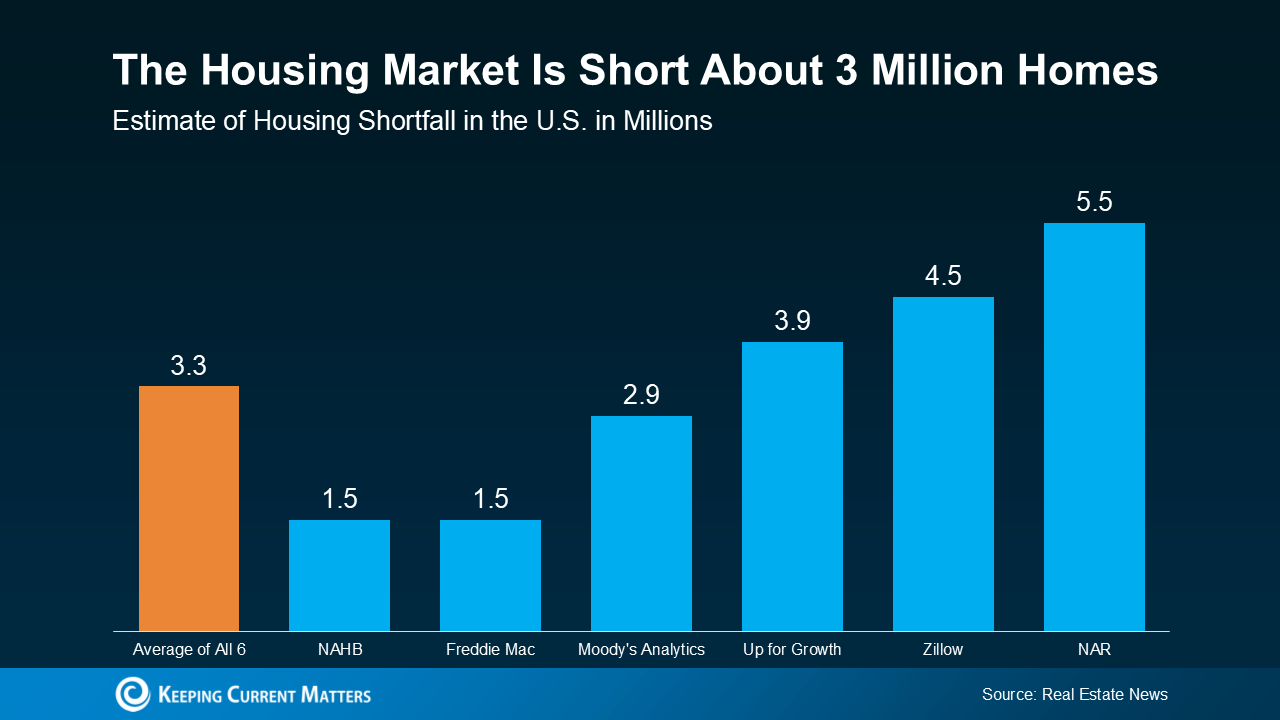 This shows there’s a significant number of homes that need to be built just to meet current demand from buyers. But what about future demand?
According to John Burns Research and Consulting (JBREC), over the next 10 years, the U.S. will need about 18 million new homes to meet projected demand, including homes for new households, second homes, and replacements for aging or unusable homes.
So, even though more homes are on the market compared to last year, there still aren’t enough of them to go around. This is where you can really win if you’re ready to sell your house.
What You Need To Remember
If you’re thinking about selling, the shortage of homes for sale means your house is likely to get some serious attention from buyers. It’ll take years to climb out of this inventory deficit, and the market is still very tight. So, when buyers are competing for relatively few homes like they are right now, that creates more interest in the houses that are on the market, putting upward pressure on prices and ultimately working in your favor.
And since every market is different, it’s important to work with a real estate agent who understands local trends. They can help you price your house right and create a strategy to attract the right buyers.
Bottom Line
While there are more homes for sale than there were at this time last year, there’s still a shortage overall. And this puts you in the driver’s seat as a seller. Reach out to a trusted real estate agent who can help you take advantage of today’s market.
